 By
By 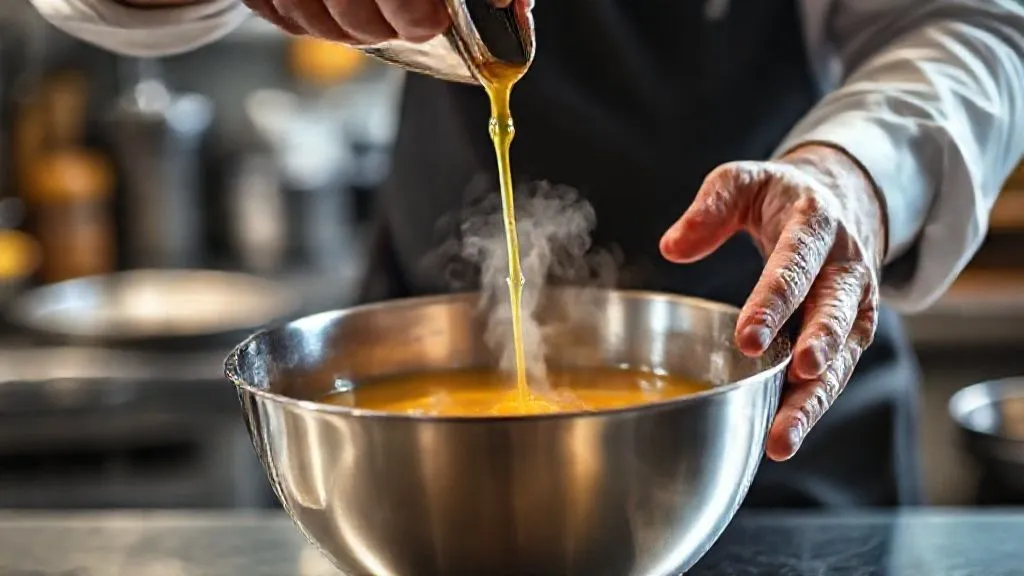
How to Prevent Egg Curdling When Tempering Large Batches for Sauces?
For over two decades in bustling professional kitchens, I've seen countless culinary teams, from seasoned veterans to eager apprentices, grapple with one of the most disheartening kitchen failures: egg curdling. It’s a common pitfall, especially when you're attempting to scale up your production to temper large batches for those silky smooth hollandaise sauces, rich custards, or creamy carbonaras. The frustration of watching a perfectly good batch of eggs turn into scrambled bits, ruining an entire pot of sauce, is something I know all too well.
This challenge isn't just about wasted ingredients; it's about lost time, compromised quality, and the sheer disappointment of a dish that doesn't meet expectations. The delicate balance required to integrate eggs into a hot liquid without turning them into an unappetizing scramble can feel like walking a tightrope, particularly under the pressure of a busy service or when preparing for a large event. Many assume it's simply bad luck or an inherent difficulty, but I assure you, it’s a skill that can be mastered with the right knowledge and approach.
In this definitive guide, I'm going to pull back the curtain on the art and science of tempering. You’ll learn not just the 'what' but the 'why' behind each crucial step, equipping you with the actionable frameworks, precise techniques, and expert insights needed to flawlessly temper eggs, even in the largest quantities. We'll explore everything from essential equipment to advanced troubleshooting, ensuring you never face the heartbreak of a curdled sauce again. Let's transform that kitchen challenge into a culinary triumph!
Understanding the Science: Why Eggs Curdle
Before we dive into prevention, it's vital to understand the enemy: protein denaturation and coagulation. Eggs are primarily protein and water. When subjected to heat, these proteins begin to unfold (denature) and then link together (coagulate). This process is what turns a liquid egg into a solid, like in a scrambled egg or an omelet.
Protein Denaturation and Coagulation
The key here is the *rate* at which this happens. Slow, gentle heat allows proteins to coagulate smoothly, creating a creamy, uniform texture. Rapid, intense heat, however, causes them to seize up quickly and irregularly, expelling water and forming those undesirable curds. Egg yolks begin to thicken around 145°F (63°C) and fully set by 158°F (70°C). Egg whites, being mostly albumin, coagulate at slightly higher temperatures, starting around 140°F (60°C) and setting by 149-158°F (65-70°C). This narrow window is where our precision becomes paramount.
Expert Insight: Think of egg proteins like tiny, coiled springs. Gentle heat allows them to slowly uncoil and link up gracefully. Aggressive heat makes them snap open violently and tangle into a messy, lumpy knot, which is essentially what curdling is.
When you add hot liquid directly to cold eggs, the localized temperature around the eggs spikes instantly, causing immediate and irreversible curdling. Tempering is the controlled process of slowly raising the egg's temperature to prevent this thermal shock, allowing the proteins to adjust and integrate harmoniously with the hot liquid.
Essential Tools for Flawless Tempering
Just like any skilled artisan, a chef is only as good as their tools. Having the right equipment can make all the difference between a perfectly smooth sauce and a curdled disaster, especially when you're working with large quantities.
- Heavy-Bottomed Pot: For heating your liquid. Its even heat distribution prevents scorching.
- Large, Sturdy Whisk: A balloon whisk is ideal for incorporating air and ensuring thorough mixing.
- Heatproof Ladle or Measuring Cup: For slowly adding hot liquid to the eggs.
- Instant-Read Thermometer: Absolutely non-negotiable for precision.
- Large, Heatproof Mixing Bowl: Crucial for the eggs, providing ample space for vigorous whisking. A stainless steel bowl is often preferred.
- Damp Cloth or Non-Slip Mat: To stabilize your mixing bowl.
The Indispensable Role of a Thermometer
In my experience, a lack of precise temperature control is the number one culprit behind tempering failures. Guessing the temperature of your hot liquid or the final sauce is a recipe for disaster. An instant-read thermometer allows you to monitor the temperature of your hot liquid before adding it to the eggs, ensuring it's not scalding hot but just right (typically around 160-180°F / 71-82°C for tempering, depending on the sauce). It also helps you monitor the final mixture when returning it to the stove, preventing overheating and ensuring the eggs reach their thickening point without overshooting into curdling territory. For more on essential kitchen tools, you might find this guide on Serious Eats insightful.
Preparation is Paramount: Setting Up for Success
Mise en place, or 'everything in its place,' is a fundamental principle in professional kitchens. When tempering large batches, it's not just a convenience; it's a necessity that minimizes stress and maximizes your chances of success.
Choosing the Right Eggs and Their Temperature
While some argue for using cold eggs, I've consistently found that bringing eggs to room temperature before tempering offers a slight advantage. Room temperature eggs mix more easily and evenly, and they experience less thermal shock when the hot liquid is introduced. This helps to prevent egg curdling when tempering large batches for sauces, as the temperature differential is slightly reduced. Always use fresh, high-quality eggs for the best results, as their proteins are more stable.
Mise en Place: Your Tempering Checklist
Before you even think about heating anything, gather all your components and prepare your workstation:
- Separate Your Eggs: If your recipe calls for yolks only (like hollandaise), separate them carefully. Ensure no shell fragments or bits of white make their way in.
- Whisk Eggs Thoroughly: In your large, heatproof bowl, whisk the eggs (or yolks) until they are completely uniform in color and texture. For extra stability, you can whisk in a pinch of salt or a spoonful of flour/cornstarch, which can help buffer against sudden heat.
- Prepare Hot Liquid: Have your stock, milk, cream, or other liquid heated in your heavy-bottomed pot. Use your thermometer to ensure it's at the target temperature (e.g., 160-180°F / 71-82°C) – never boiling!
- Stabilize Your Bowl: Place your egg bowl on a damp cloth or non-slip mat to prevent it from sliding around during vigorous whisking. This frees up one hand for pouring.
- Clear Your Workspace: Ensure you have ample room to work, free from distractions. Tempering requires your full attention.
The Core Technique: Slow and Steady Wins the Race
This is where the rubber meets the road. The goal is to gradually introduce the hot liquid to the eggs, raising their temperature slowly and gently. This process, often called 'lacing' or 'streaming,' is the cornerstone of how to prevent egg curdling when tempering large batches for sauces.
Step-by-Step Tempering Process for Large Batches
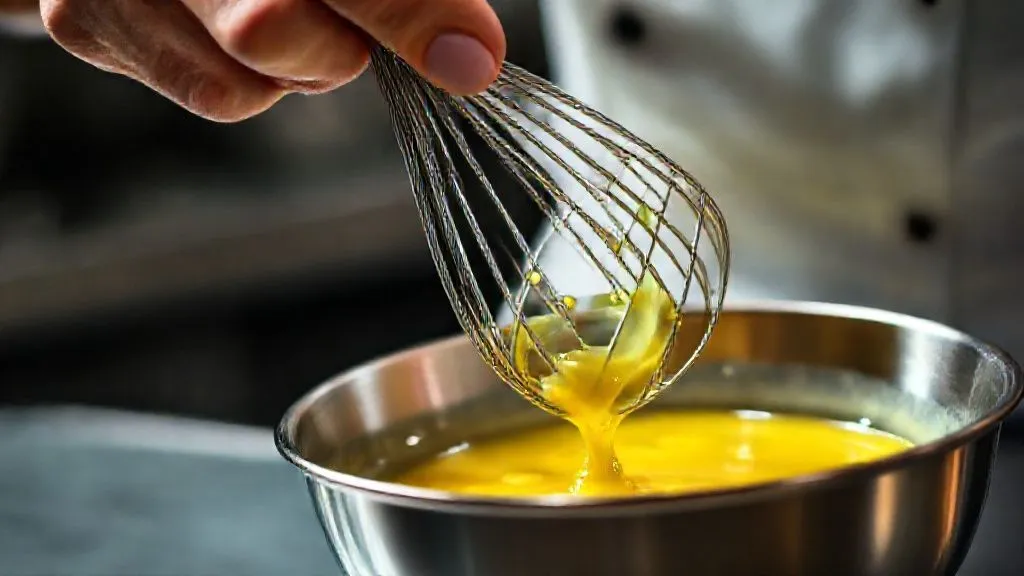
- Vigorously Whisk Eggs: Begin by continuously whisking your eggs in the large bowl. This isn't just about mixing; it's about creating a vortex that will quickly distribute the incoming hot liquid and prevent any single part of the egg from getting too hot too fast.
- Drizzle Hot Liquid Slowly: With one hand, slowly and steadily drizzle a very thin stream of the hot liquid into the whisked eggs. Think of it as adding it drop by drop, especially at the beginning. This initial addition is the most critical; it's where the eggs are most vulnerable to shock.
- Constant Whisking is Key: Do not stop whisking. Your other hand should be continuously and vigorously whisking the eggs in the bowl as you pour. This ensures the hot liquid is immediately incorporated and its heat is evenly distributed throughout the egg mixture.
- Gradually Increase Volume: After you've added about a cup or two of the hot liquid, the egg mixture's temperature will have risen significantly. You can then slightly increase the speed of your pour, but always maintain a steady stream and continuous whisking. The goal is to bring the egg mixture's temperature up to roughly the temperature of your hot liquid.
- Return to Heat (if necessary): Once about one-third to one-half of the hot liquid has been incorporated into the eggs, and the egg mixture feels warm to the touch (or reaches about 130-140°F / 54-60°C on a thermometer), you can now safely pour this tempered egg mixture back into the main pot of hot liquid on the stove.
- Continue Cooking Gently: Stir or whisk the entire mixture continuously over low to medium-low heat until it thickens to your desired consistency. Again, use your thermometer to avoid overcooking. For most sauces, you're aiming for around 160-170°F (71-77°C). Do not let it boil!

Mastering Heat Management: The Crucial Element
Beyond the slow pour, controlling the overall heat is paramount. Even a perfectly tempered egg mixture can curdle if it's subjected to excessive heat once it's all combined. This is especially true for large batches, where residual heat can continue to cook the sauce even after it's removed from the direct flame.
The Double Boiler Method: A Safety Net
For particularly delicate sauces like hollandaise or crème anglaise, or when you're feeling less confident with direct heat, a double boiler (bain-marie) is your best friend. Set your pot of tempered sauce over a saucepan of simmering water, ensuring the bottom of the sauce pot doesn't touch the water. The gentle, indirect heat provides a much more forgiving environment, making it significantly easier to prevent egg curdling when tempering large batches for sauces. It allows for precise, gradual thickening without the risk of hot spots.
Controlling Your Heat Source
When cooking directly on the stove, always use low to medium-low heat. Keep your eyes on the sauce and your hand on the whisk. If you see even the slightest hint of thickening too quickly, or if steam is rising too vigorously, remove the pot from the heat immediately, continue whisking, and allow it to cool slightly before returning it to the burner. A good practice, especially with large volumes, is to remove the pot from the heat every minute or so, whisk well, then return it. This intermittent heating gives you more control.
Expert Insight: Patience is not just a virtue in the kitchen; it's a critical ingredient for perfectly tempered sauces. Rushing the process, especially with large quantities, almost guarantees a mishap. Slow down, observe, and trust your thermometer.
Remember, the sauce will continue to thicken slightly as it cools due to residual heat, so it's often better to undercook it slightly than to overcook it. This is particularly important for custards and pastry creams.
Troubleshooting Common Tempering Mistakes
Even with the best intentions, mistakes can happen. Recognizing them early and knowing how to respond can sometimes save a batch from being completely ruined. In my years, I've seen these three mistakes crop up most often:
Mistake 1: Adding Hot Liquid Too Quickly
This is the cardinal sin of tempering. If you pour too fast, the eggs will scramble instantly. The solution? Slow down. Start with a trickle, not a stream. If you realize you've poured too much too fast and see tiny curds forming, immediately remove the egg bowl from the hot liquid, continue whisking vigorously, and try to salvage it by adding a splash of cold liquid (like milk or cream) to bring the temperature down rapidly. You might be able to strain out the curds later, but prevention is always better.
Mistake 2: Insufficient Whisking
If you're not whisking continuously and vigorously enough, the hot liquid will pool in one area, cooking the eggs in that spot. Your arm might get tired, especially with large batches, but consistency is key. If you find your arm tiring, switch hands or take a very brief pause to shake out your arm, then resume with renewed vigor. A good, heavy-duty whisk can make a big difference here.
Mistake 3: Overheating the Final Mixture
Once the tempered egg mixture is returned to the main pot, it's easy to get complacent. However, the risk of curdling remains until the sauce reaches its final, desired consistency and is removed from the heat. This is where your thermometer is your best friend. If you see the sauce thickening too rapidly, or if it starts to look granular, immediately remove it from the heat and whisk it over an ice bath (a bowl of ice water) to quickly drop the temperature. For sauces like hollandaise, a quick blast in a blender can sometimes smooth out small curds, but this is a last resort.

Advanced Tips for Preventing Curdling in High-Volume Production
When you're dealing with truly massive quantities, the stakes are higher, and every little trick helps. These advanced techniques can provide an extra layer of security.
Incorporating Stabilizers: A Chef's Secret Weapon
For certain sauces, especially those that need to hold well or be reheated, incorporating a small amount of starch can act as a safety net. A cornstarch or flour slurry (mixed with cold liquid before adding to the eggs) can increase the viscosity of the egg mixture, making it more resistant to curdling. The starch gels at a higher temperature than eggs coagulate, providing a buffer. This is particularly useful in custards or pastry creams where a robust, stable texture is desired. According to a study published in the Journal of Agricultural and Food Chemistry, starches can significantly impact the thermal stability of protein-rich systems.
Case Study: The Grand Hotel's Hollandaise Challenge
The Grand Hotel's Hollandaise Challenge: A Case Study in Scale
The Grand Hotel, renowned for its lavish Sunday brunch, faced a persistent challenge: maintaining a consistent, perfectly emulsified hollandaise sauce for hundreds of guests. Their previous method of tempering small batches frequently led to inconsistencies, with some batches curdling under the pressure of rapid production, costing them significant time and premium ingredients. Chef Antoine, their head chef, realized they needed a more robust approach for how to prevent egg curdling when tempering large batches for sauces.
Antoine implemented a multi-pronged strategy. First, he invested in a professional-grade bain-marie system, ensuring all hollandaise batches were held at a precise, gentle temperature after initial tempering. Second, he standardized the tempering process, requiring all cooks to use an instant-read thermometer for both the clarified butter (kept at 160°F / 71°C) and the initial egg mixture (brought up to 135°F / 57°C before combining). Finally, he introduced a small amount of pre-gelatinized tapioca starch (a natural, flavorless stabilizer) into the egg yolk mixture before tempering. This starch acted as a buffer, making the egg proteins more resilient to temperature fluctuations.
The results were transformative. The Grand Hotel saw a 75% reduction in curdled hollandaise batches within the first month. Consistency improved dramatically, service became smoother, and ingredient waste plummeted. This success not only boosted kitchen morale but also solidified the hotel's reputation for culinary excellence, proving that thoughtful process adjustments and a touch of science can overcome even the most challenging scaling issues.
Expert Insight from Chef Antoine: "When scaling, don't just multiply ingredients; amplify your precision. A small stabilizer can be a huge insurance policy, and consistent temperature monitoring is non-negotiable for large volumes."
The Role of Acidity and Fat in Egg Stability
Beyond heat, other factors play a significant role in how eggs behave. Understanding these can give you even greater control over your sauces.
Balancing pH Levels for Smoother Sauces
Acidity, often in the form of lemon juice or vinegar, is crucial for many egg-based sauces like hollandaise and mayonnaise. It helps to denature the egg proteins slightly, allowing them to form a more stable emulsion. However, too much acidity can actually accelerate curdling if the heat is too high. The trick is balance. Often, the acidic component is whisked into the egg yolks *before* tempering, or added gradually during the final stages of sauce production, once the eggs are already somewhat stabilized. For instance, in hollandaise, a reduction of white wine vinegar and peppercorns forms the base that the egg yolks are whisked into.
Fats as a Buffer Against Heat
Fats, such as butter or cream, also play a protective role. They coat the egg proteins, slowing down the rate at which they coagulate and helping to create a smoother, richer texture. This is why sauces like crème anglaise, which are rich in dairy fat, can be a bit more forgiving than a simple egg wash. When making large batches of creamy sauces, ensuring adequate fat content can be an additional layer of defense against curdling. As culinary scientist Harold McGee highlights in "Keys to Good Cooking," fat acts as a lubricant, allowing proteins to slide past each other rather than seizing up.
| Factor | Impact on Eggs | Prevention Strategy |
|---|---|---|
| Heat Application | Rapid coagulation, curdling | Slow, gradual addition; constant whisking; precise temperature monitoring |
| Acidity (pH) | Can aid stability in moderation; too much can accelerate curdling | Balance with fats/dairy; add after initial tempering if possible; monitor pH carefully |
| Fat Content | Buffers against heat, aids emulsification, coats proteins | Incorporate butter/cream; use egg yolks for richer sauces; ensure proper fat integration |
| Whisking Technique | Distributes heat evenly, creates emulsion, prevents hot spots | Vigorous, continuous whisking during tempering and cooking; use appropriate whisk type |
| Starch Additives | Increases viscosity, provides thermal buffer, enhances stability | Pre-mix with cold liquid; add small amounts to egg mixture before tempering for robust sauces |
Maintaining Sauce Integrity After Tempering
Your work isn't done once the sauce is perfectly tempered and thickened. Maintaining its pristine texture, especially in a professional setting where sauces might need to be held for service, is another critical step to prevent egg curdling when tempering large batches for sauces.
Holding Temperatures for Service
For most egg-based sauces, holding them at a gentle, consistent temperature is key. A bain-marie (water bath) is indispensable here. Keep the sauce over warm, not simmering or boiling, water. The ideal holding temperature is usually around 140-150°F (60-66°C). Stir the sauce occasionally to prevent a skin from forming and to redistribute heat evenly. Never let it sit directly on a heat source, as residual heat can continue to cook the eggs, leading to eventual curdling or breaking of the emulsion.
Reheating Tempered Sauces Safely
Reheating an egg-based sauce is always a delicate operation. If at all possible, try to make only what you need. However, if reheating is unavoidable, do so very gently. Use a double boiler or a very low heat setting on the stove, stirring constantly. If the sauce appears to be breaking or curdling, immediately remove it from the heat and try whisking in a tablespoon of cold liquid (water, milk, or stock) to bring its temperature down and potentially re-emulsify it. This technique, often called 'shocking,' can sometimes rescue a sauce on the brink, as detailed by culinary experts at The Culinary Institute of America.
Frequently Asked Questions (FAQ)
Question: Can I use a blender for tempering eggs for large batches? While a blender can be used for the final emulsification of some sauces (like hollandaise to incorporate butter), it's generally not recommended for the initial tempering process itself. The high speed of a blender can introduce too much air or heat too quickly, potentially scrambling the eggs. The slow, controlled drizzle and manual whisking method is far superior for preventing thermal shock and ensuring even incorporation when tempering large batches.
Question: What's the ideal temperature range for tempering eggs? There isn't a single 'ideal' temperature for the hot liquid you add to eggs, as it depends on the specific sauce. However, a good rule of thumb is to aim for the hot liquid (milk, cream, stock) to be between 160-180°F (71-82°C). The critical point is to ensure the egg mixture itself reaches about 130-140°F (54-60°C) before you combine it back with the main liquid, ensuring its proteins are gently warmed and less prone to curdling.
Question: How do I fix a slightly curdled sauce? If your sauce has just started to curdle (small, grainy bits appearing), immediately remove it from the heat. Try vigorously whisking in a tablespoon or two of cold liquid (water, milk, or cream) one at a time. This can sometimes lower the temperature enough to stop further coagulation and help re-emulsify the sauce. For very minor curdling, passing the sauce through a fine-mesh sieve can remove the small clumps, though it might impact the texture slightly. For more severely curdled sauces, unfortunately, they are often beyond repair.
Question: Does the type of egg (large, jumbo, duck egg) matter for tempering? Yes, to some extent. While the fundamental principles remain the same, larger eggs have a higher proportion of white, and duck eggs have a higher fat content in their yolks. These differences can slightly alter the coagulation temperature and richness. For consistency in large batch production, stick to one standard size (e.g., large eggs) and adjust your recipe accordingly if you switch. Freshness is more critical than size; fresher eggs have stronger proteins that hold up better.
Question: Can I temper egg whites for sauces, or is it only for yolks? Tempering is primarily a technique used for egg yolks or whole eggs in sauces because their proteins are more prone to curdling under direct heat, and they are responsible for thickening and emulsifying. Egg whites are less commonly tempered for sauces as their primary function is often aeration (meringues) or binding (clear soups), where rapid coagulation might be desired or a different method of incorporation is used.
Key Takeaways and Final Thoughts
Mastering the art of tempering, especially when you need to prevent egg curdling when tempering large batches for sauces, is a hallmark of a truly skilled chef. It transforms what seems like a daunting, high-risk process into a confident, controlled culinary act. The secret, as we've explored, lies not in magic, but in a deep understanding of protein science, meticulous preparation, and unwavering precision.
- Understand the Science: Know why eggs curdle – it’s about rapid protein coagulation.
- Equip Yourself: A good whisk, heavy-bottomed pot, and especially an instant-read thermometer are non-negotiable.
- Prioritize Mise en Place: Prepare everything in advance, including bringing eggs to room temperature.
- Embrace the Slow Drizzle: Add hot liquid to eggs in a very thin stream, whisking vigorously and continuously.
- Control Your Heat: Use low heat, consider a double boiler, and never let your sauce boil.
- Learn to Troubleshoot: Recognize common mistakes and know how to react quickly.
- Consider Stabilizers: For large volumes, a touch of starch can be your safety net.
- Mind the Aftercare: Hold and reheat sauces gently to maintain their integrity.
With these insights and techniques, you're now equipped to approach large batch tempering with confidence. Remember, practice makes perfect. Don't be discouraged by initial setbacks. Each attempt is a learning opportunity, bringing you closer to that perfectly smooth, unctuous sauce that elevates any dish. Go forth and temper with precision, and enjoy the delicious rewards of your newfound mastery!
Recommended Reading
- Crispy Keto Air Fryer Meals: 7 Fixes for Texture Fails in Meal Prep?
- Unlock Perfect Jun Tea: How to Troubleshoot Fermentation Issues Like a Pro
- 7 Proven Ways: Attract Parents via Kids' Kitchen Safety Protocols
- 5 Proven Strategies: Maintain Clean Eating on Business Trips Without Failing
- Why Green Mold? 7 Proven Fixes for Tempeh Incubation Issues
0 Comentários: