 By
By 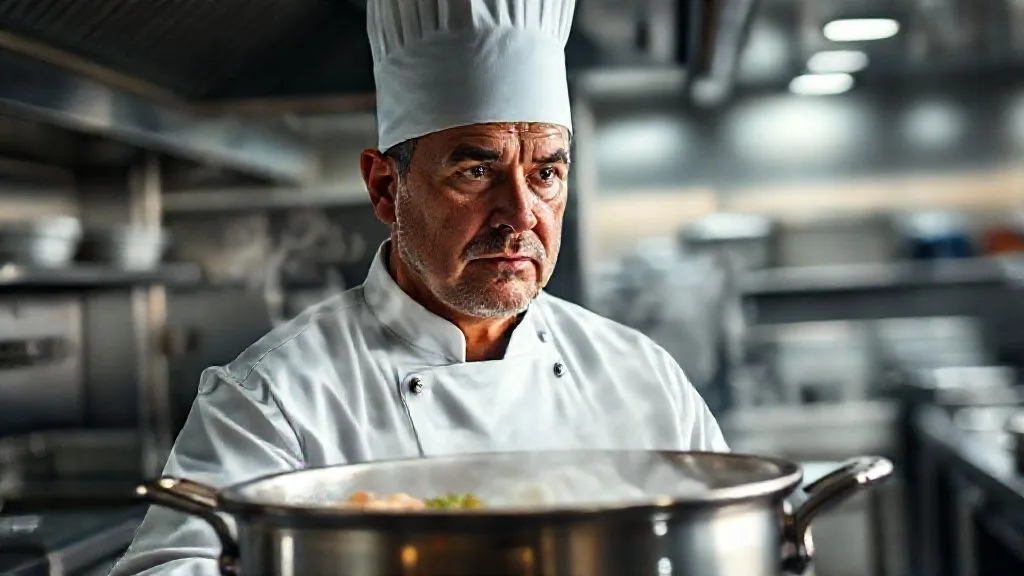
How to Scale a Complex One-Pot Restaurant Soup Recipe for 200 Covers Consistently?
For over two decades in the demanding world of professional kitchens, I've witnessed the exhilarating highs and frustrating lows of scaling recipes. There’s a distinct magic in a perfectly crafted one-pot soup, a harmony of flavors built layer by layer. But translating that magic from a small batch to serving 200 covers consistently, without losing its soul, is where many kitchens stumble.
The challenge isn't just about multiplying ingredients; it's about maintaining flavor integrity, managing production flow, ensuring food safety, and controlling costs, all while keeping that 'homemade' quality. Many chefs face ingredient breakdown, uneven cooking, or a drastic dip in quality when attempting to scale their signature dishes for high volume. It's a common pitfall that can damage a restaurant's reputation.
This article isn't just a recipe multiplier; it's a comprehensive framework. I'll share my proven strategies, gained from years of hands-on experience, for tackling the specific complexities of scaling one-pot restaurant soup recipes. We'll dive into ingredient science, equipment leverage, workflow optimization, and stringent quality control protocols to ensure every bowl served is as perfect as the first.
The Fundamental Shift: From Home Kitchen to Commercial Volume
The biggest mistake I've seen aspiring chefs make when scaling is assuming linearity. You can't simply multiply every ingredient by 20 or 50 and expect the same results. The physics and chemistry of cooking change dramatically with volume, affecting everything from heat distribution to ingredient interaction.
Ingredient Behavior Under Pressure: Understanding the Transformation
Consider the delicate balance of a complex one-pot soup. Herbs can become bitter, starches can thicken excessively, and vegetables can turn to mush if not handled correctly in large batches. The increased cooking time and sustained heat required for larger volumes fundamentally alter how ingredients behave.
"Scaling isn't just about more; it's about different. Recognize how ingredients transform under commercial volume, and adapt your approach accordingly."
For instance, aromatic vegetables like onions and garlic will release their flavors much more intensely over a longer period in a larger pot, potentially overwhelming other notes. Delicate herbs, if added too early, will lose their vibrancy and often contribute a hay-like flavor. Starches from potatoes or legumes can lead to scorching at the bottom of a large kettle if not constantly agitated.

Recipe Deconstruction & Re-engineering for Scale
Before you even think about multiplying, you need to dissect your original recipe. Identify its core components, the flavor drivers, and the textural elements. This isn't just about ingredients; it's about understanding the 'why' behind each step.
Understanding the 'Flavor Matrix': Core vs. Ancillary Ingredients
In any complex soup, there are core ingredients that form the backbone of its flavor (e.g., roasted bones for stock, mirepoix, key spices) and ancillary ingredients that add freshness, texture, or a final aromatic lift (e.g., fresh herbs, a swirl of cream, a squeeze of lime). When scaling, the ratios and timing of these two categories often need significant adjustment.
The 'Scaling Factor' Paradox: It's Not Always Linear
As I mentioned, a simple multiplication rarely works. Liquids, especially water, evaporate at a different rate in large, deep kettles compared to wide, shallow pots. Seasoning becomes trickier because the palate perceives salt and spice differently in larger volumes. My approach involves a carefully calculated scaling factor, often slightly less than a direct multiplication, especially for potent ingredients.
| Ingredient Category | Small Batch Adjustment | 200-Cover Scaling Adjustment | |
|---|---|---|---|
| Aromatics (Onion, Celery, Carrot) | Sauté until tender, golden | Sauté in batches or use larger, deeper vessels; monitor caramelization carefully to avoid bitterness. | |
| Starches (Potatoes, Legumes) | Add directly, cook until tender | Add later in cooking process, or partially cook separately to prevent mushiness and scorching at bottom of pot. Consider type of starch for breakdown resistance. | |
| Delicate Herbs (Cilantro, Parsley) | Add at end for freshness | Add in batches at service, or infuse in smaller quantities and add concentrated liquid. Avoid prolonged cooking. | |
| Liquids (Broth, Water) | Follow recipe | Reduce initial liquid by 10-15% to account for less evaporation; adjust seasoning gradually and taste frequently. | |
| Acid (Lemon Juice, Vinegar) | Add to taste | Introduce carefully at the end; acidity can become more pronounced in larger volumes and balance other flavors differently. | |
| Spices (Ground Cumin, Paprika) | Measure precisely | Start with 75-80% of scaled amount, taste, and adjust. Flavor compounds can intensify over longer cooking periods. | My Culinary Experience & Food Science Principles |
Here are my actionable steps for re-engineering your recipe:
- Analyze Original Recipe for Critical Flavor Points: Identify where the core flavors are developed (e.g., searing meat, deglazing, specific spice toasts).
- Identify Ingredients Prone to Breakdown or Over-Intensification: List all ingredients that might react poorly to prolonged cooking or high volume (e.g., leafy greens, certain spices, delicate vegetables).
- Adjust Liquid Ratios and Cooking Times: Start with a slightly reduced liquid amount, accounting for less surface evaporation in large kettles. Extend cooking times for tougher ingredients, but be prepared to adjust for delicate ones.
- Consider Flavor Enhancers for Consistency: Sometimes, a dash of umami (like mushroom powder, tomato paste, or a high-quality bouillon) can help maintain flavor depth across large batches without artificiality.
- Test in Incremental Batches: Don't jump straight to 200 covers. Test a 20-portion batch, then 50, then 100. This iterative process helps fine-tune.
According to a study published by Cornell University's School of Hotel Administration, consistency in product delivery is a top factor in customer satisfaction for high-volume food service. This underscores the importance of this meticulous deconstruction phase.
Equipment & Infrastructure: Your High-Volume Arsenal
You cannot scale a complex one-pot soup to 200 covers using home kitchen equipment. Investing in the right tools is non-negotiable for efficiency, consistency, and food safety.
Temperature Control & Agitation: Preventing Scorching and Ensuring Even Cooking
For large volume soup production, steam-jacketed kettles are your best friend. They provide even heat distribution around the entire vessel, preventing scorching that's common with direct-heat pots. Many modern kettles also come with built-in agitators, which are crucial for preventing starches from sticking and ensuring all ingredients cook uniformly.
For soups requiring puréeing, a commercial-grade immersion blender is indispensable. It allows you to purée directly in the kettle, saving countless hours and reducing the risk of burns associated with transferring hot liquids to smaller blenders.
Rapid Chilling Systems: Food Safety and Quality Preservation
If you plan to batch cook and hold for future service, a blast chiller is essential. Rapidly cooling soup from cooking temperature to below 40°F (4°C) within 4 hours is critical for food safety, preventing bacterial growth, and preserving the soup's quality and vibrant color. Without this, you risk not only health code violations but also a significant degradation in flavor and texture.

Masterful Mise en Place & Workflow Optimization for 200
Mise en place, or 'everything in its place,' is paramount in any kitchen, but for 200 covers, it needs to be a military-grade operation. It's about breaking down the complex recipe into manageable, individual tasks and assigning them efficiently.
Prep-Ahead Strategies: Pre-Chopping, Blanching, Making Bases
Maximize your prep time. Can your mirepoix be chopped a day in advance? Can specific vegetables be blanched and shocked, ready to be added later? Can a base stock be made in a separate, even larger batch and stored? These decisions drastically reduce cooking day pressure.
Staggered Production: Cooking in Manageable Sub-Batches
Even with a 200-portion capacity kettle, sometimes it's more efficient to cook in two 100-portion sub-batches, especially if certain ingredients need different cooking times or if you want to ensure freshness throughout a long service period. This also acts as a safety net; if one batch has an issue, you still have the other.
Case Study: How "The Broth House" Streamlined Soup Prep for 200 Daily
"The Broth House," a popular urban eatery known for its daily rotating complex one-pot soups, initially struggled with inconsistent quality and kitchen bottlenecks when scaling their signature Thai Coconut Curry Soup for 200 daily covers. Their initial approach was to cook one massive batch from start to finish. The result was often overcooked vegetables and a muddy flavor profile.
By implementing a staggered production and advanced mise en place strategy I consulted on, they transformed their operation. They pre-roasted chicken and vegetables the day before, prepared their curry paste base in large quantities, and made their coconut milk infusion separately. On the day of service, the final assembly of the soup was done in two 100-portion kettles, with delicate ingredients like cilantro and lime juice added only minutes before service. This resulted in a significant improvement in flavor vibrancy, consistent texture, and reduced kitchen stress, allowing them to meet demand effortlessly.
The Art of Batch Cooking & Holding: Preserving Peak Flavor
Once your soup is cooked, the battle isn't over. How you hold and reheat it is crucial for maintaining the quality you worked so hard to achieve.
Holding Equipment: Steam Tables and Induction Warmers
For service, soup should be held at a minimum of 135°F (57°C). Commercial steam tables or induction warmers are designed for this. Crucially, avoid holding soup at these temperatures for extended periods beyond 2-4 hours if possible. Continuous heating can degrade flavors and textures.
Reheating Protocols: How to Reheat Without Diminishing Quality
If you're batch cooking ahead for multiple services, proper reheating is key. Always reheat rapidly to at least 165°F (74°C) within two hours, stirring frequently to ensure even heat distribution. Never reheat on a low setting, as this keeps the food in the 'danger zone' for bacterial growth. Reheat only the amount you expect to serve, as repeated reheating significantly degrades quality.
"Thermal abuse is the enemy of quality. Every time you reheat, you risk losing flavor, texture, and nutritional value. Plan your batches to minimize this."
Adhering to strict food safety guidelines, such as those provided by the FDA Food Code, is not just about compliance; it's about preserving your product's integrity and your customers' health.
Standard Operating Procedures (SOPs) & Documentation: The Blueprint for Consistency
This is where the 'consistently' in 'How to scale a complex one-pot restaurant soup recipe for 200 covers consistently?' truly comes into play. Without clear, detailed SOPs, consistency is left to chance, relying on individual memory or interpretation.
Detailed Recipe Cards & Portion Control Guides
Every step, every ingredient, every measurement must be documented. My recipe cards go beyond just ingredients; they include: cooking temperatures, specific equipment to use, critical timing notes (e.g., 'add delicate herbs 5 minutes before service'), visual cues for doneness, and even troubleshooting tips. Portion control guides, including specific ladle sizes and bowl weights, ensure every customer receives the same experience.
Visual Aids & Training: Photos, Videos for Staff
Don't just write it; show it. Incorporate photos of correctly prepped ingredients, the desired consistency at different stages, and the final plated product. Short training videos can be invaluable for new staff, demonstrating complex techniques or specific equipment usage. This minimizes errors and accelerates training.
Feedback Loops: Empowering Staff to Report Inconsistencies
Encourage your team to be your eyes and ears. Implement a system where staff can report any perceived inconsistencies in flavor, texture, or appearance. This 'bottom-up' feedback is crucial for catching minor deviations before they become major problems. A simple logbook or a quick daily debrief can facilitate this.
Quality Control & Sensory Evaluation: Your Daily Taste Test
You, or a designated, highly trained palate, must taste the soup at every critical stage. This is non-negotiable. From the initial stock base to the final product before service, tasting is your ultimate quality control.
Sensory Panels: Designated Tasters
For truly complex soups, consider having a small, trained sensory panel – perhaps yourself, your sous chef, and another experienced cook. Each person brings a slightly different perspective, helping to identify nuances or potential issues. Use a standardized tasting sheet to ensure objective feedback.
Corrective Actions: What to Do When a Batch Isn't Perfect
Despite all precautions, sometimes a batch might be off. Having a predetermined set of corrective actions is vital. Is the soup too salty? Add more liquid or a starchy ingredient like potato purée. Too bland? A concentrated stock reduction, a pinch more spice, or a touch of acid can revive it. Too thick? Adjust with hot stock or water. The key is to have these solutions ready, not to improvise under pressure.

Inventory Management & Cost Control in High-Volume Soup Production
Scaling isn't just about culinary excellence; it's about business acumen. Efficient inventory management and stringent cost control are vital when producing for 200 covers.
Supplier Relationships: Consistent Quality Ingredients
Work with reputable suppliers who can consistently deliver high-quality ingredients. A slight variation in the quality of a core ingredient like tomatoes or chicken can drastically alter the flavor profile of a large batch. Build strong relationships; they are your partners in consistency.
Yield Management: Maximizing Every Component
When cooking at scale, every scrap counts. Implement practices like using vegetable trimmings for stock, or leftover roasted chicken for another dish. This reduces waste and improves your overall food cost percentage. Understanding ingredient yields is paramount for accurate ordering and recipe costing.
As Harvard Business Review often highlights, operational efficiency directly impacts profitability. For restaurants, this translates to meticulous inventory and waste management.
Empowering Your Team: Training for Consistency and Efficiency
Your team is your most valuable asset. Even the most perfectly designed recipe and state-of-the-art equipment are useless without a well-trained, motivated crew.
Cross-Training & Clear Communication
Cross-train your staff on different stations and tasks within the soup production process. This creates flexibility and resilience in your kitchen. Foster an environment of clear, concise communication. Everyone needs to understand their role and how it contributes to the final product.
Delegating with Precision: Assigning Specific Roles
For a 200-cover soup production, assign specific roles: one person on sautéing aromatics, another on managing the kettle, a third on final seasoning and quality checks. This specialization improves efficiency and accountability. Regular check-ins and debriefs reinforce these roles and ensure smooth operation.
Empowering your team with knowledge and responsibility is key to successfully navigate 'How to scale a complex one-pot restaurant soup recipe for 200 covers consistently?'.
Frequently Asked Questions (FAQ)
Q: How do I prevent vegetables from becoming mushy when scaling a complex one-pot soup? A: This is a common challenge. My strategy involves adding vegetables in stages based on their cooking time. Harder vegetables like carrots and potatoes go in earlier. Softer ones, like zucchini or leafy greens, should be added much later, often just 15-20 minutes before the soup is fully cooked. For very delicate items, consider blanching them separately and adding them at the very end or even at the point of service. Also, ensure your large kettle has an agitator or you stir frequently to prevent overcooking at the bottom.
Q: What's the biggest mistake chefs make when scaling soup recipes for high volume? A: In my experience, the single biggest mistake is assuming a linear scaling factor for all ingredients and cooking times. It's not just about multiplying. Over-seasoning, especially with salt and potent spices, is another frequent error because flavors intensify differently in large batches. Neglecting proper temperature control during cooling and holding is also critical, leading to both quality degradation and food safety risks.
Q: How often should I taste during the scaling process to ensure consistency? A: You should taste at every critical juncture. This includes after preparing your base stock, after adding aromatics, after introducing main ingredients, before seasoning adjustments, and most importantly, before service. For a 200-cover operation, I recommend a designated tasting protocol: taste at the beginning, middle, and end of the cooking process, and then a final taste check by a lead chef before the soup leaves the kitchen.
Q: Can I freeze large batches of complex soups without losing quality? A: Yes, but with caveats. Soups with cream, dairy, or delicate starches (like potatoes) tend to separate or become grainy when frozen and reheated. For best results, consider freezing the base broth separately and adding fresh dairy/starches upon reheating. Rapid chilling with a blast chiller before freezing is crucial. Always freeze in appropriate, airtight containers to prevent freezer burn and thaw slowly in the refrigerator before reheating.
Q: What role does acidity play in large-batch soups, and how should I manage it? A: Acidity (from lemon juice, vinegar, or tomatoes) is vital for balancing flavors and brightening a soup, especially in larger quantities where richness can become heavy. However, its perception can change with volume. I recommend adding acidity cautiously towards the end of the cooking process, tasting frequently. It's easier to add more than to correct an overly acidic soup. Acid can also help cut through fat and enhance the perception of other flavors.
Key Takeaways and Final Thoughts
Mastering the art of scaling a complex one-pot restaurant soup for 200 covers consistently is a blend of culinary science, meticulous planning, and operational discipline. It's a challenge that, when conquered, can elevate your restaurant's reputation and profitability.
- Deconstruct, Don't Just Multiply: Understand the unique behavior of ingredients at scale.
- Invest in the Right Tools: Commercial equipment is not a luxury; it's a necessity for consistency and safety.
- Standardize Everything: SOPs, detailed recipes, and visual aids are your blueprint for success.
- Taste Relentlessly: Your palate is the ultimate quality control mechanism.
- Empower Your Team: Training and clear communication are crucial for flawless execution.
Remember, every bowl of soup you serve is an extension of your kitchen's commitment to excellence. With these strategies, you're not just serving 200 portions; you're delivering 200 consistent, delicious experiences, solidifying your reputation as a culinary expert. Go forth and create magnificent soup, at any scale!
Recommended Reading
- Unlock the Secrets: How to Adapt Recipes for Air Fryer Family Meals?
- Fixing Mushy Pulled Pork: 7 Expert Strategies for Large Batches
- Unlock the Secret: Safely Leaving Your Slow Cooker Unattended All Day
- Urgent Health Inspection? 7 Steps to Organize Your Small Kitchen Fast
- 8 Expert Strategies to Boost Remote Team Engagement When Morale is Low
0 Comentários: