 By
By 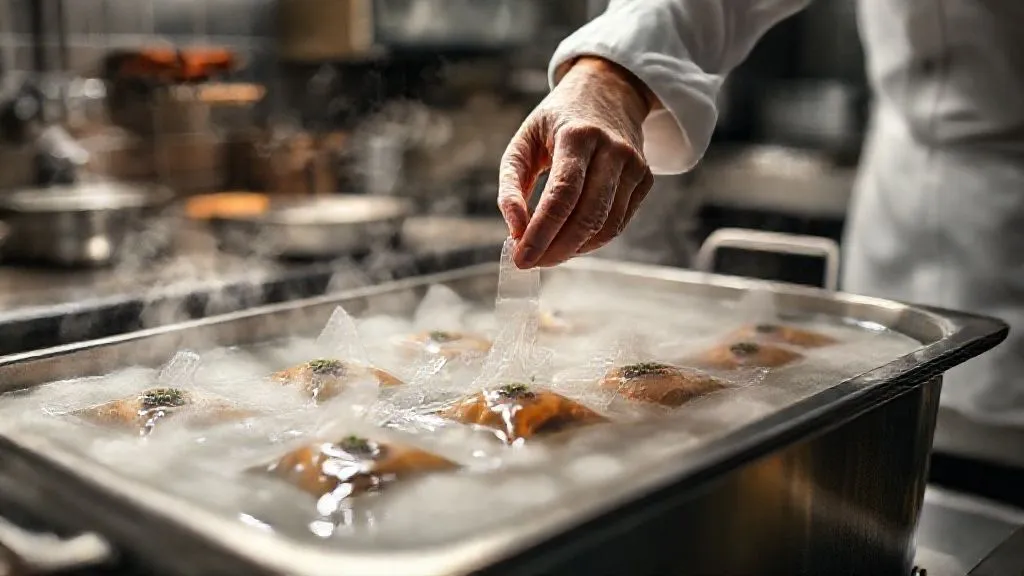
How to Safely Hold Large Sous Vide Batches for Extended Service?
For over 15 years in the high-stakes world of professional kitchens, I've seen the brilliance of sous vide transform operations. But I've also witnessed the anxious moments, the near misses, and sometimes, the costly mistakes that arise when chefs try to scale this precision technique without a robust holding strategy. The promise of consistent, perfectly cooked food can quickly turn into a food safety nightmare if not handled correctly.
The challenge isn't just about cooking perfectly; it's about maintaining that perfection and, crucially, its safety, especially when you're dealing with large volumes for extended service periods. Whether you're running a busy restaurant, a catering operation, or just prepping for a big family event, the question of 'how to safely hold large sous vide batches for extended service?' looms large. It’s a tightrope walk between maintaining ideal temperatures, preventing bacterial growth, and preserving the texture and flavor you worked so hard to achieve.
In this definitive guide, I'll pull back the curtain on the strategies I've personally developed and refined over years of practical application. We’ll dive deep into actionable frameworks, proven techniques, and essential equipment considerations that will empower you to confidently hold large sous vide batches, ensuring both culinary excellence and unwavering food safety. Get ready to transform your sous vide workflow from a source of stress into a cornerstone of efficiency and quality.
Understanding the Core Challenge: Time, Temperature, and Quality
The foundation of safely holding any food, especially sous vide preparations, rests on a deep understanding of the 'danger zone'. This refers to the temperature range – typically between 40°F (4.4°C) and 140°F (60°C) – where pathogenic bacteria multiply most rapidly. For sous vide, where foods are often cooked at precise, lower temperatures over extended periods, this zone becomes even more critical during holding.
When you're dealing with large batches, the thermal mass of the food itself can present a challenge. A single steak might cool or heat quickly, but a large container of chicken breasts will retain heat or cold for much longer, making rapid transitions through the danger zone difficult without proper planning. This is where many operations falter, inadvertently creating environments ripe for bacterial growth or compromising the very quality sous vide is designed to achieve.
Beyond safety, there's the equally important aspect of quality. Holding food for too long, even at safe temperatures, can degrade texture, dry out proteins, or diminish vibrant flavors. My goal, and yours, should always be to maintain that 'just cooked' perfection. This requires not just adherence to temperature guidelines but also an appreciation for how different ingredients react to extended holding. It’s a delicate balance, but one that’s entirely achievable with the right strategies.

The Critical Role of HACCP Principles in Sous Vide Holding
Any discussion about food safety in a professional setting, especially concerning advanced techniques like sous vide, must include a nod to HACCP – Hazard Analysis and Critical Control Points. This systematic preventative approach to food safety from biological, chemical, and physical hazards is not just a guideline; it's a lifeline. In my experience, implementing a robust HACCP plan for sous vide batch holding is non-negotiable for ensuring trust and compliance.
For sous vide, identifying Critical Control Points (CCPs) is paramount. These are the points in your process where a control measure can be applied to prevent, eliminate, or reduce a food safety hazard to an acceptable level. When we talk about holding large sous vide batches, the key CCPs revolve around temperature monitoring, time limits, and proper chilling/reheating protocols. Ignoring these can lead to severe consequences, both for your customers and your business reputation.
A well-documented HACCP plan for sous vide holding will cover everything from the initial cooking temperature and time, through the cooling process, to the final reheating and service. It provides a clear, auditable trail that demonstrates your commitment to safety. For deeper insights into HACCP, I often refer to the comprehensive guidelines provided by regulatory bodies. You can find excellent resources on the FDA's HACCP Principles and Application Guidelines, which are foundational for any commercial kitchen.
In my years, the difference between a successful, safe kitchen and one plagued by issues often boils down to the rigor of its HACCP implementation. It's not just paperwork; it's proactive risk management.
Strategy 1: The "Cook-Hold" Method for Immediate Service
When you need to serve large sous vide batches relatively soon after cooking, the 'cook-hold' method is your go-to. This strategy involves cooking the food to its desired doneness and pasteurization, then immediately transferring it to a holding environment that maintains a safe temperature above the danger zone until service. The key here is consistency and preventing any temperature dips.
For most proteins, this means holding them at or above 130°F (54.4°C). While 130°F is the minimum for safe long-term holding to prevent bacterial growth, many chefs prefer slightly higher temperatures like 135-140°F (57-60°C) to ensure a comfortable buffer and better heat retention upon plating. The duration for this holding can vary, but generally, cooked and pasteurized foods can be safely held for several hours at these temperatures without significant quality degradation.
Here’s how I approach the cook-hold method for large batches:
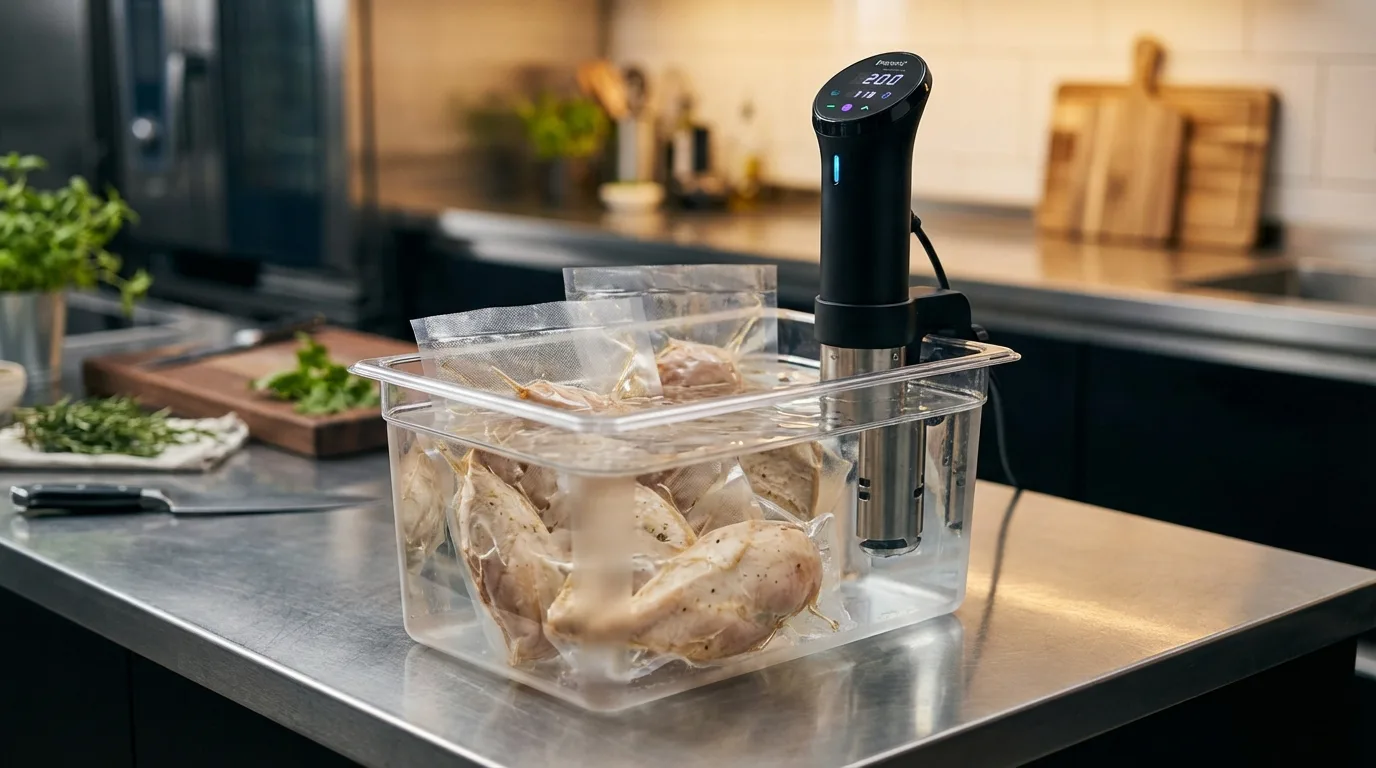
- Cook to Perfection: Ensure your sous vide batch is cooked to the target temperature and time for full pasteurization. Use a reliable immersion circulator and an insulated water bath.
- Immediate Transfer: Once cooked, transfer the vacuum-sealed pouches directly from the cooking bath to a dedicated holding water bath or a heated holding cabinet.
- Maintain Safe Temperature: The holding environment must be set to a minimum of 130°F (54.4°C), preferably 135-140°F (57-60°C). For water baths, ensure ample circulation to prevent cold spots.
- Monitor Constantly: Regularly check the temperature of your holding environment and, if possible, spot-check the internal temperature of a sacrificial pouch.
- Limit Holding Time: While safe for hours, aim to serve within 2-4 hours for optimal quality. Proteins like fish are more susceptible to textural changes during prolonged holding.
- Prevent Cross-Contamination: Ensure all surfaces, utensils, and hands coming into contact with the cooked food are clean and sanitized.
This method is ideal for busy lunch or dinner services where you need a steady supply of perfectly cooked components ready to be finished and plated.
Strategy 2: Rapid Chilling and Reheating for Future Service
For large-scale catering, meal prep, or restaurant operations that need to prepare food days in advance, the 'rapid chill and reheat' strategy is indispensable. This method prioritizes quickly moving food through the danger zone twice – first during chilling, then during reheating – to minimize bacterial exposure and maximize shelf life. This is often how to safely hold large sous vide batches for extended service beyond a few hours.
The critical element here is speed. Food must be cooled from 140°F (60°C) to 70°F (21°C) within two hours, and then from 70°F (21°C) to 40°F (4.4°C) or below within an additional four hours. This 6-hour, two-stage cooling process is a non-negotiable food safety standard. Skipping or slowing down this process significantly increases the risk of bacterial growth, especially for spore-forming bacteria that thrive in anaerobic (oxygen-free) environments like vacuum-sealed pouches.
Once properly chilled, sous vide items can be safely stored in the refrigerator at 40°F (4.4°C) or below for several days, sometimes up to a week, depending on the ingredient and initial handling. When it's time for service, the food must be reheated rapidly to at least 165°F (74°C) for 15 seconds within two hours before being served or held hot.
Implementing Rapid Chill & Reheat:
- Post-Cook Chill: Immediately after cooking and pasteurization, plunge sealed pouches into an ice bath, a blast chiller, or a walk-in refrigerator with ample air circulation. Spread pouches out to maximize surface area contact with the cold.
- Monitor Cooling: Use a probe thermometer (carefully inserted between pouches or into a sacrificial pouch) to track cooling times and temperatures. Document these critical control points rigorously.
- Refrigerated Storage: Once below 40°F (4.4°C), store pouches in clean containers in a refrigerator, clearly labeled with contents and date of chilling.
- Reheating Protocol: To reheat, submerge pouches in a 165°F (74°C) water bath. For large batches, a powerful immersion circulator in a well-insulated tank is essential to bring the core temperature up quickly.
- Verify Reheat Temperature: Before serving, ensure the internal temperature of the food reaches 165°F (74°C) for at least 15 seconds.
- Serve or Hot Hold: Once reheated, either serve immediately or transfer to a hot holding unit maintaining above 135°F (57°C).
This method offers immense flexibility and allows for efficient kitchen workflow, especially for high-volume operations. It’s the cornerstone of how to safely hold large sous vide batches for extended service when immediate consumption isn't the plan.
| Process Stage | Temperature Range | Time | Key Action |
|---|---|---|---|
| Cooking & Pasteurization | Varies by food (e.g., 130-185°F) | Varies by food (e.g., 1-12+ hours) | Achieve target doneness & pasteurization |
| Rapid Chilling (Stage 1) | 140°F to 70°F (60°C to 21°C) | < 2 hours | Ice bath or blast chiller |
| Rapid Chilling (Stage 2) | 70°F to 40°F (21°C to 4.4°C) | < 4 hours | Continue chilling to refrigeration temps |
| Cold Holding | < 40°F (4.4°C) | Up to 7 days (ingredient dependent) | Store in refrigerator |
| Reheating | > 165°F (74°C) | < 2 hours (to reach temp) | Water bath, oven, or combi oven |
| Hot Holding | > 135°F (57°C) | < 4 hours for quality | Maintain safe serving temperature |
Essential Equipment and Setup for Large Batch Holding
Scaling sous vide operations requires more than just bigger pots. The right equipment is fundamental to maintaining safety and quality when you need to safely hold large sous vide batches for extended service. Investing in commercial-grade tools ensures reliability, precision, and efficiency.
Key Equipment for Large Batch Holding:
- Commercial Immersion Circulators: Forget consumer models. You'll need powerful units (1200W+ per circulator) capable of heating and maintaining large volumes of water consistently. For very large tanks, multiple circulators might be necessary.
- Insulated Water Baths/Tanks: Large capacity, well-insulated tanks are crucial. Insulation minimizes heat loss, reduces energy consumption, and helps maintain stable temperatures. Commercial-grade polycarbonate tanks or insulated stainless steel vessels are ideal.
- Blast Chillers: For the rapid chill and reheat method, a blast chiller is a game-changer. It rapidly reduces food temperatures, moving items through the danger zone in minutes, not hours. This is an investment that pays dividends in safety and efficiency.
- Heated Holding Cabinets: For the cook-hold method, a professional heated holding cabinet can keep finished, seared items warm at safe temperatures without drying them out. Ensure it has precise temperature control and humidity options.
- Accurate Thermometers: Calibrated probe thermometers are essential for verifying internal food temperatures during chilling, reheating, and holding. Always have backups and calibrate them regularly.
- Vacuum Sealer & Pouches: A commercial chamber vacuum sealer is vital for large batches, creating a stronger, more reliable seal than external clamp models. High-quality, food-grade pouches are non-negotiable.
- Ice Baths: While a blast chiller is ideal, a large, dedicated ice bath (with a significant ice-to-water ratio) is a cost-effective alternative for rapid chilling in smaller operations.
When setting up your station, consider workflow. Position your cooking baths, chilling stations, and holding areas logically to minimize travel time and potential for temperature abuse. Ensure adequate power supply for multiple circulators and other equipment. A well-designed setup is not just about convenience; it's a critical component of your food safety management plan.

Monitoring and Documentation: Your Safety Net
In the world of professional kitchens, especially when dealing with advanced techniques like sous vide and extended holding, what isn't documented essentially didn't happen. Robust monitoring and meticulous record-keeping are your ultimate safety net. They provide irrefutable evidence of compliance with food safety regulations and give you the data needed to continually improve your processes. This is especially true when you need to confirm how to safely hold large sous vide batches for extended service.
Every critical control point – from the initial cooking temperature and time to chilling rates and holding temperatures – must be recorded. This isn't just bureaucratic red tape; it's a crucial part of your HACCP plan and a testament to your commitment to food safety. Imagine a health inspection or, worse, a foodborne illness incident; your logs will be your first line of defense, proving due diligence.
Key Documentation Practices:
- Temperature Logs: Maintain detailed logs for cooking, chilling, and holding temperatures. Record the time, temperature, and the initials of the person who took the reading.
- Time Logs: Document the start and end times for cooking, chilling, and reheating processes. Pay particular attention to the 2-hour and 4-hour marks during cooling.
- Calibration Records: Keep a log of when thermometers and other temperature-sensing equipment were last calibrated. Regular calibration ensures accuracy.
- Batch Identification: Label all sous vide pouches with the product name, date cooked, and date chilled (if applicable). This ensures proper rotation and traceability.
- Corrective Actions: If a temperature falls out of specification, document the corrective action taken (e.g., re-chilling, discarding, re-heating). This shows proactive management.
Remember, these records aren't just for external auditors. They are invaluable tools for internal quality control. By reviewing your logs, you can identify trends, pinpoint areas for improvement, and ensure your team consistently adheres to best practices. For more detailed guidance on record-keeping, refer to resources from organizations like the NSF International's food safety guidelines, which often provide sample forms and best practices.
| Date | Product | Cook Temp | Cook Time | Chill Start Temp | Chill End Temp (70°F) | Chill End Temp (40°F) | Reheat Temp (165°F) | Hold Temp | Initials | Notes |
|---|---|---|---|---|---|---|---|---|---|---|
| 2023-10-26 | Chicken Breast | 145°F (63°C) | 2.5 hrs | 140°F (60°C) | 1.5 hrs | 3.5 hrs | 168°F (75.5°C) | 138°F (59°C) | JD | Batch #CBL001. All within spec. |
Troubleshooting Common Sous Vide Holding Issues
Even with the best plans, issues can arise when holding large sous vide batches. My years in the kitchen have taught me that anticipating these problems and knowing how to swiftly address them is key to maintaining both safety and quality. Here are some common challenges and my expert advice on how to tackle them.
1. Uneven Holding Temperatures:
Problem: You've set your water bath to 135°F, but some pouches feel cooler than others, or your probe thermometer shows inconsistencies. This is a common pitfall when attempting to safely hold large sous vide batches for extended service.
Solution: Ensure your immersion circulator is powerful enough for the volume of water and food. More importantly, ensure proper water circulation. Overcrowding the bath is a frequent culprit; leave ample space between pouches for water to move freely. Consider adding a second circulator for very large tanks to ensure uniform heating and circulation. If using a heated holding cabinet, avoid overfilling and ensure air vents are clear.
2. Texture Degradation (Mushy or Dry):
Problem: After hours of holding, your perfectly cooked steak or chicken feels mushy, or conversely, slightly dry, despite being in a sealed pouch.
Solution: This is often a matter of holding time versus temperature. While 130°F (54.4°C) is safe, some proteins, particularly delicate ones like fish or lean chicken breast, can become overly tender or chalky after prolonged exposure to heat. Experiment with slightly lower, but still safe, holding temperatures (e.g., 130°F instead of 135°F) for shorter durations. For longer holds, consider the rapid chill and reheat method, which preserves texture better. Additionally, ensure the initial cook time wasn't excessively long.
3. Off-Smells or Bloating in Pouches:
Problem: You open a chilled or held pouch, and there's an unusual odor, or the pouch appears bloated. This is an immediate red flag.
Solution: Discard immediately. This indicates bacterial growth, often from improper chilling, inadequate cooking, or a compromised seal. Never taste test. Review your HACCP logs for chilling times and temperatures. Check your vacuum sealer for proper function and ensure pouches are not punctured during handling or storage. Re-educate staff on proper sealing and chilling protocols. This is paramount for how to safely hold large sous vide batches for extended service.
When in doubt, throw it out. No food product is worth the risk of a foodborne illness. Your reputation, and more importantly, your customers' health, depend on this simple rule.
4. Inefficient Reheating:
Problem: Your large batch of chilled sous vide items takes too long to reach 165°F (74°C) for service, impacting service flow.
Solution: Ensure your reheating water bath is at temperature before introducing the pouches. Use a powerful circulator and an insulated tank. For very large volumes, consider breaking batches down into smaller, more manageable portions for reheating, or pre-heat pouches in a combi oven set to steam mode before transferring to a water bath for a quick final temperature boost.
Case Study: A High-Volume Restaurant's Sous Vide Holding Success
Case Study: "The Bistro's" Seamless Sous Vide Service
"The Bistro," a popular urban restaurant known for its consistent quality and bustling weekend brunch service, faced a significant challenge: how to safely hold large sous vide batches for extended service without compromising their reputation for perfection. Their weekend demand for perfectly cooked eggs, pork belly, and short ribs often led to bottlenecks and inconsistent product, especially during peak hours. Their original method involved cooking small batches on demand, which was inefficient and stressful.
Working with my team, we implemented a comprehensive sous vide batch holding strategy centered around the 'rapid chill and reheat' method for their high-volume items. For items like their signature sous vide short ribs, which require a long cooking time, they would cook large quantities overnight, then immediately transfer them to a commercial blast chiller. The blast chiller rapidly brought the internal temperature down from 185°F (85°C) to below 40°F (4.4°C) within 4 hours, well within HACCP guidelines. These chilled, vacuum-sealed pouches were then stored in a dedicated, temperature-controlled walk-in refrigerator, clearly labeled with cook and chill dates.
During service, as orders came in, specific portions of short ribs were pulled from cold storage and reheated in a 165°F (74°C) sous vide water bath. They used two powerful commercial immersion circulators in a large, insulated tank to ensure rapid and even reheating. Each batch was monitored with a calibrated probe thermometer to confirm it reached 165°F (74°C) within 45 minutes, ensuring both safety and efficiency. For their sous vide eggs, a 'cook-hold' method was adopted, with eggs cooked to 145°F (63°C) and held in a separate, precisely controlled 140°F (60°C) water bath for up to 3 hours during service.
The results were transformative: "The Bistro" saw a 30% increase in kitchen efficiency during peak service, a marked improvement in product consistency across all sous vide items, and a complete elimination of service bottlenecks related to these dishes. Their chefs reported less stress, and management noted a significant reduction in food waste due to overcooking or spoilage. This strategic approach to how to safely hold large sous vide batches for extended service not only enhanced their operational flow but also solidified their reputation for culinary excellence and unwavering food safety.

Frequently Asked Questions (FAQ)
Q: How long can I safely hold sous vide cooked food in the refrigerator after chilling? A: After proper rapid chilling, most sous vide cooked and vacuum-sealed foods can be safely stored in the refrigerator (below 40°F / 4.4°C) for up to 5-7 days. However, this depends heavily on the specific ingredient, its initial microbiological load, and strict adherence to chilling protocols. Delicate items like fish or ground meats might have a shorter shelf life, while whole muscle proteins tend to last longer. Always rely on visual and olfactory cues, and when in doubt, discard.
Q: Can I freeze sous vide cooked food after chilling? A: Absolutely, and it's an excellent strategy for even longer-term storage. After cooking and rapid chilling, vacuum-sealed pouches can be frozen for several months (up to 6-12 months, depending on the food) without significant loss of quality. When ready to use, thaw in the refrigerator overnight and then reheat to 165°F (74°C) before serving. This is another effective method for how to safely hold large sous vide batches for extended service beyond refrigeration limits.
Q: What if my sous vide water bath loses power during a long hold? A: This is a critical food safety concern. If the water bath temperature drops below 130°F (54.4°C) and remains in the danger zone for more than 4 hours, the food should be discarded. If it drops but you can quickly bring it back up to temperature within a shorter period (e.g., less than 2 hours in the danger zone), it might be salvageable, but it's a judgment call. For commercial operations, always err on the side of caution and discard. Investing in an alarm system for your circulators can prevent such incidents.
Q: Does searing before or after holding affect safety or quality? A: For safety, searing typically occurs *after* holding, just before service. Searing before holding can introduce surface bacteria that might multiply during a long chill or hold, especially if not done rigorously. For quality, searing after holding ensures that beautiful crust and fresh aroma. Searing before and then chilling can lead to a less appealing texture upon reheat. Always sear post-hold for optimal results and safety.
Q: Are there specific foods that are more challenging to hold safely via sous vide? A: Yes. Ground meats, poultry, and fish inherently have higher surface area and often higher initial bacterial loads, making them more susceptible to issues during holding if protocols aren't strictly followed. Vegetables, while generally safer from a bacterial standpoint, can suffer textural degradation (e.g., becoming too soft) if held for too long at high temperatures. Always be extra diligent with these ingredients.
Key Takeaways and Final Thoughts
Mastering how to safely hold large sous vide batches for extended service isn't just about culinary prowess; it's about meticulous planning, unwavering adherence to food safety principles, and a deep understanding of your equipment. It's a skill that elevates your kitchen's efficiency, consistency, and, most importantly, its safety standards.
- Embrace HACCP: Integrate Hazard Analysis and Critical Control Points into every stage of your sous vide holding process.
- Know Your Methods: Choose between 'cook-hold' for immediate service and 'rapid chill & reheat' for future service, understanding the unique demands and benefits of each.
- Invest in Quality Equipment: Powerful circulators, insulated tanks, and blast chillers are not luxuries; they are necessities for large-scale, safe operations.
- Monitor & Document Relentlessly: Your logs are your proof of diligence and your tools for continuous improvement.
- Prioritize Safety Over Everything: When in doubt, discard. No shortcut is worth compromising health or reputation.
The journey to truly master sous vide, especially at scale, is continuous. By applying these expert strategies, you're not just cooking; you're engineering a system of culinary excellence and impeccable food safety. Go forth, cook confidently, and ensure every batch you serve is as safe as it is delicious. Your kitchen, and your customers, will thank you for it.
Recommended Reading
- 7 Natural Ways to Extend Classic Dessert Shelf Life for Catering
- Mastering Professional Slow Cookers: 7 Ways to Avoid Mushy Textures Consistently
- Stop Dry Focaccia Delivery: 7 Expert Hacks for Lasting Freshness
- 7 Expert Steps: Prevent Mold on Commercial Dehydrated Fruit Snacks
- Unlock the Secret: Safely Leaving Your Slow Cooker Unattended All Day
0 Comentários: